Two reports. Two very differentnumbers. One very uncomfortable meeting.
That scenario plays out in revenue reviews, board updates, and pipeline calls more often than most teams admit. When it does, the instinct is to find the right number. The better instinct is to find out why two different numbers existed in the first place.
What lineage actually solves in executive reporting
The word lineage sounds technical (and maybe a bit historical), but the problems it solves are completely opposite of it.
When a metric is wrong, or when two teams are working from different versions of the same metric, the question that matters is not which number is correct. It is: where did this number come from, what touched it along the way, and when did it last change.
Lineage answers that question.
It creates a traceable record from source data through transformations to the final figure that appears in a report or dashboard.
Without it, root-cause analysis turns into a conversation where everyone points at a different system and nobody can prove anything.
For decision makers, lineage is the difference between a reporting dispute that takes three days to resolve and one that takes three hours.
How to operationalize lineage in governance
Lineage by itself is a record.
The practical starting point is mapping critical KPIs to their upstream sources.
Not every metric needs deep lineage documentation. The ones that drive decisions, that appear in board reporting, that tie to revenue targets or customer commitments, those need a clear owner, a known source, and a documented transformation path.
Once that map exists, the next step is defining what triggers a review.
A source schema change. A calculation update. A new data connector going live. These are the moments when lineage documentation needs to be updated and when stakeholders need to know that a metric may have changed its meaning even if the number looks similar.
Building this into standard change management processes is what separates teams that prevent reporting disputes from teams that spend Monday mornings resolving them.
Who owns sources, transformations, and activation
One of the more uncomfortable questions lineage surfaces is ownership.
When data moves from a source system through a transformation layer and into a report or segment, each step should have a named owner.
In practice, it often does not. Source data is owned by whoever manages the integration. Transformations were built by a developer who may no longer be on the team.
The report is owned by whoever uses it most frequently, which is not the same as owning the data behind it.
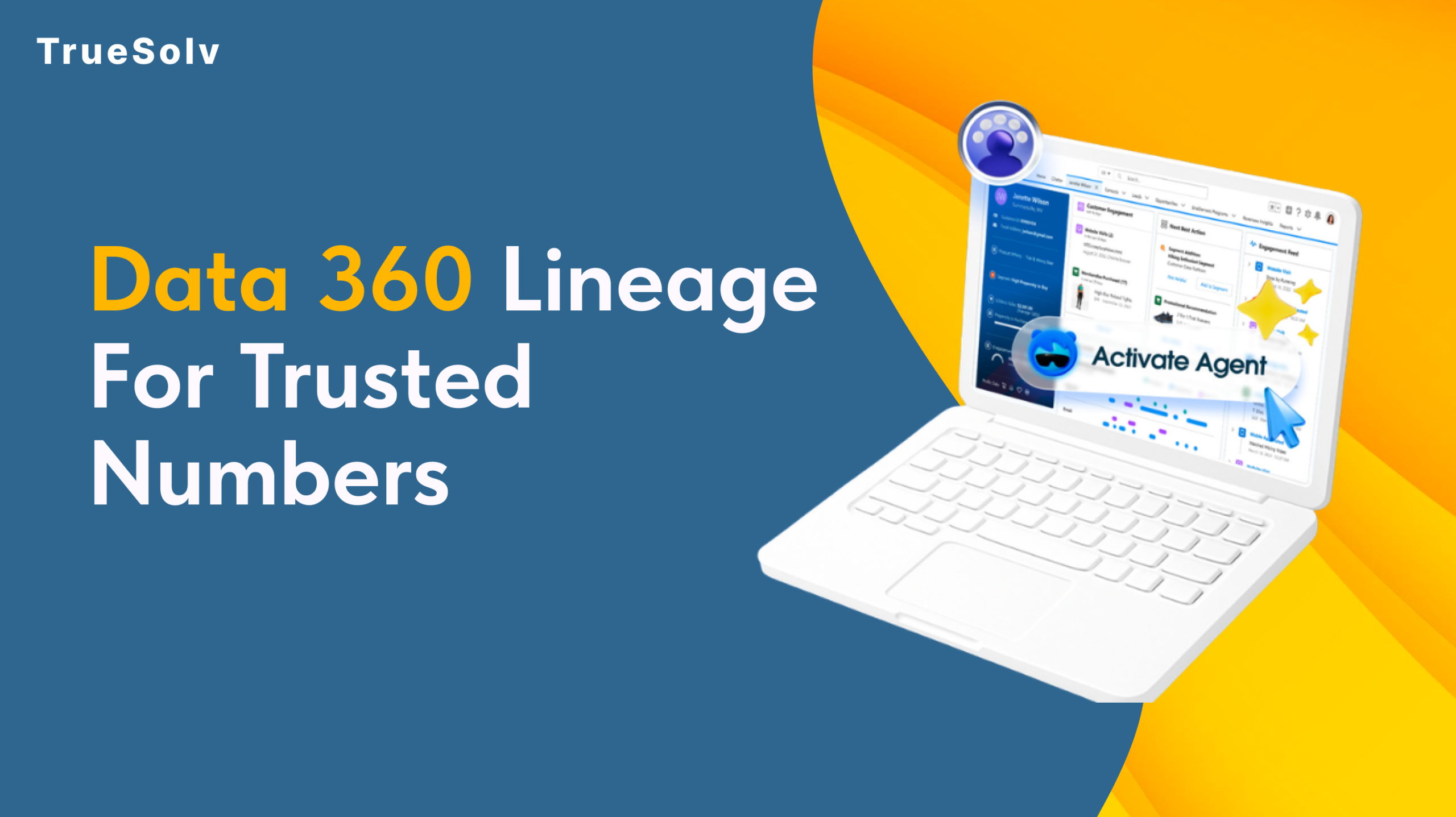
Data 360 supports explicit ownership assignment across sources, calculated insights, and activation targets.
The governance value of that is not just administrative tidiness. It means that when a number changes unexpectedly, there is a clear escalation path. Someone is accountable for each layer.
For RevOps and IT leaders, building that ownership map into onboarding for new data assets is a significantly more effective practice than reconstructing it after a reporting incident.
Change control for analytics and segments
Segments built in Data 360 can drive marketing journeys, sales prioritization, service routing, and AI agent behavior.
When a segment definition changes, the downstream effects can be substantial. A change to an audience filter might quietly exclude a large group of high-value accounts from a nurture sequence. A modified calculation might shift how pipeline is categorised in forecasting.
Change control for analytics assets follows the same logic as change control for code. Document what changed. Note who approved it. Record what the definition was before. Make it recoverable.
Data 360 Unified Lineage gives this process its foundation by logging transformations and activation events.
The approval workflow and the communication to stakeholders still requires a deliberate governance decision.
Validation checks before activating new data
A new data source going into production without validation checks is a common source of metric drift that nobody notices for weeks. The ingestion works. The records land. The numbers look plausible. But the field mapping is slightly off, the identity resolution rules do not account for a quality issue in the source, and slowly the unified profile becomes less accurate than the system it was meant to improve.
Adding validation checkpoints before activating new data is not a significant overhead. It is a comparison of expected record counts, a check on field completeness, a review of identity resolution match rates before the new source is used in reporting or segmentation.
Building this into the activation workflow rather than treating it as an optional QA step is what keeps lineage trustworthy over time. A lineage record that shows a clean path through a poorly validated source is not governance. It is a well-documented mistake.
What decision makers should prioritize
Reporting trust is a business problem with a governance solution.
The technical capabilities to track, audit, and govern data from source to activation exist in the platform. What requires a leadership decision is the commitment to build ownership, change control, and validation into standard operating practice rather than treating them as documentation exercises that happen after something breaks.
The organizations that do this well tend to share one common trait. They decide that a reporting dispute costs more than the governance process that prevents it, and they act on that before the dispute happens rather than after.
- Map critical KPIs to their upstream sources and assign a named owner to each layer
- Define what events trigger a lineage review and communicate changes to stakeholders proactively
- Add validation checks to the activation workflow so new data earns its place in reporting before it influences decisions
Trust in data improves when data has a paper trail, and a paper trail only exists if someone decided it was worth building.
TrueSolv can build a lineage-first reporting governance model for your Salesforce and Data 360 environment. Follow our newsletter for data and CRM operations topics.