Every Salesforce partner in 2026 has a deck. Slides about transformation. Words like agentic and data-native and AI-first. All of them sound prepared. Very few of them are asking about your business before they start selling you their methodology.
Choosing wrong costs more than the invoice. It costs the months of internal time spent managing a partner that was never the right fit, the rework that follows a go-live nobody was proud of, and the political capital burned explaining to leadership why the CRM still does not do what it was supposed to do.
The market in 2026 is noisier than it has ever been
There are over two thousand registered Salesforce consulting partners globally. A significant portion of them have restructured their positioning in the last eighteen months to lead with AI. Some of them have earned that positioning. Others have added the word Agentforce to their website and called it a capability.
The noise is not the problem. The problem is that buyers have less time to filter it than ever, and the signals that used to indicate quality, certification counts, tier badges, years in the ecosystem, are no longer sufficient differentiators on their own. A Summit-tier partner with eight hundred certified professionals can still assign your project to a team that has never solved a problem like yours.
The right question is not which partner is most impressive. It is which partner is most likely to deliver the specific outcome your organisation needs, at the pace you need it, without creating a dependency you cannot get out of.
Start with business alignment, not technical credentials
The first conversation with a prospective partner should not be about their methodology. It should be about your business. What are the actual outcomes you need Salesforce to produce. Not features, not clouds, not integrations. Outcomes.
A partner worth working with will ask what success looks like in twelve months and push back if the answer is vague. They will want to understand your sales motion, your service model, your data landscape, and your internal capacity before they suggest a solution architecture. If a partner has already drafted a proposal before understanding any of that, the proposal is not for your business. It is for the last business that looked roughly similar.
Business alignment means the partner understands the commercial problem you are trying to solve and can connect every element of the implementation to that problem. It means they will tell you when a feature you asked for does not actually solve the problem, rather than building it because it was in scope. That kind of honesty is less common than it should be and considerably more valuable than a polished slide on transformation.
Time-to-value is a strategy question, not a project management question
Most Salesforce implementations take longer than planned. Some of that is scope change. Some of it is data quality problems nobody anticipated. Some of it is a partner that builds for elegance when the business needed something working by the end of the quarter.
Time-to-value as a selection criterion means asking prospective partners how they sequence delivery. Do they phase the work so users get something useful early, or do they build the complete solution and hand it over at the end of a long engagement. The second model is fine for certain types of projects. For most CRM implementations, where adoption depends on users seeing value before they form opinions about whether the system works, phased delivery with early wins is materially better.
Ask specifically for examples where a partner delivered measurable business value within the first sixty to ninety days of a project. What did that look like. What was the business outcome. If they struggle to answer with specifics, the concept of time-to-value may be on their website but not in their delivery approach.
What AI and data depth actually means in a partner context
Every partner claims AI capability in 2026. The useful distinction is between partners who can configure Agentforce features and partners who can design an AI strategy that is grounded in how your data is structured, how your processes work, and what your users will actually adopt.
The first group can get Einstein features switched on. The second group can tell you why those features will produce poor outputs if the underlying data has not been unified, why a particular agent use case will not work in your service model without process redesign, and what the governance model for AI-generated content needs to look like in your industry.
A straightforward way to test this is to ask a prospective partner about a situation where they recommended against an AI feature a client wanted to deploy. If the answer involves a conversation about data quality, user trust, or process readiness rather than just technical constraints, that is a partner operating at the right level of depth. If they have never had that conversation, they are likely saying yes to everything and hoping the outcomes follow.
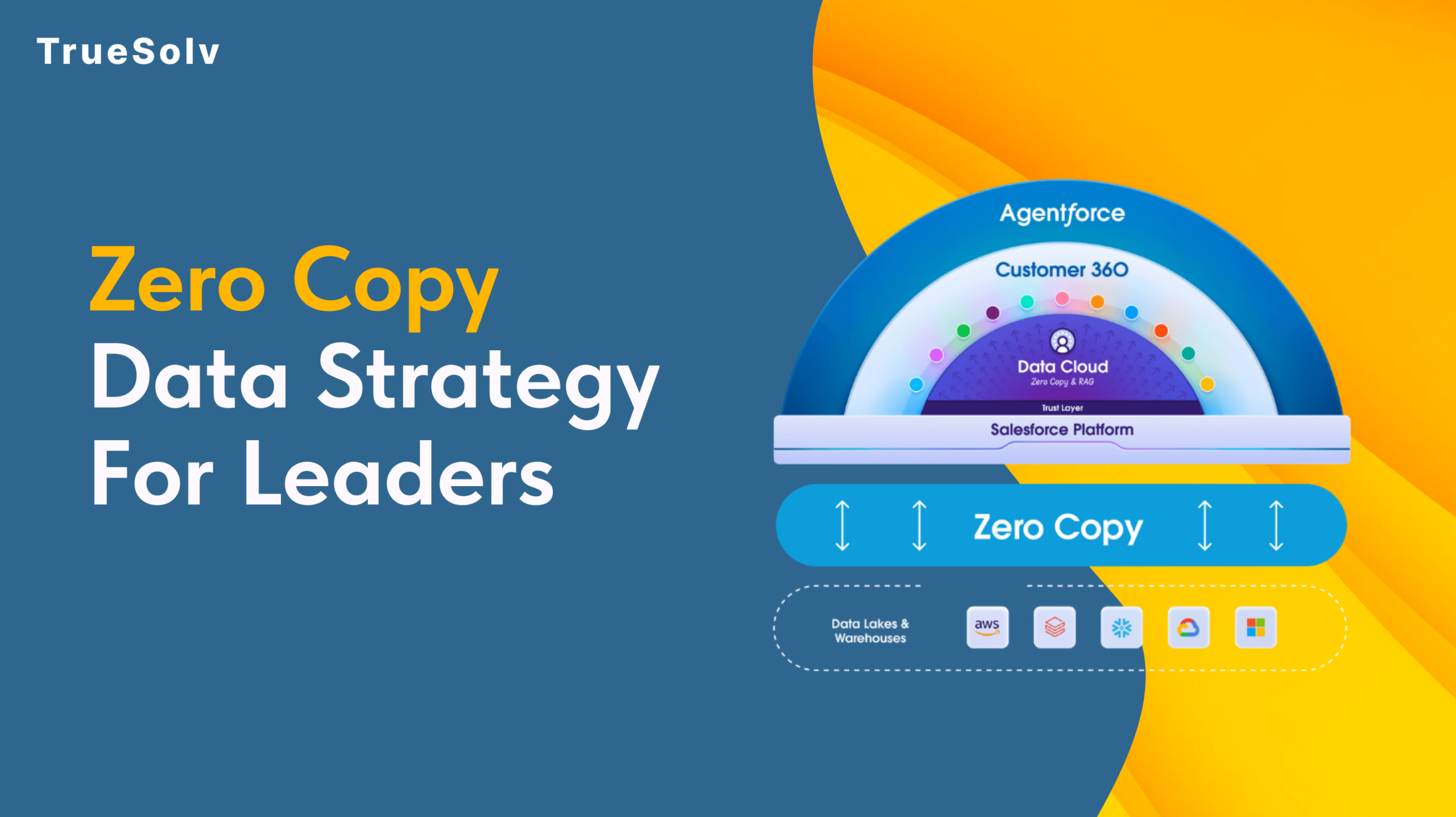
On Data Cloud and Zero Copy specifically, the partner should be able to explain the trade-offs between ingestion and federation without prompting. They should have a position on identity resolution at scale and know where it works well versus where it produces frustrating results. Platform enthusiasm is not the same as platform knowledge.
Risk reduction as a selection criterion
Risk in a Salesforce implementation comes from several predictable directions. Scope that was never clearly defined. A project team that is strong in presales and thin in delivery. Technical debt from a previous implementation that nobody fully disclosed. Data migration that was underestimated. Change management that was treated as a training exercise rather than an organisational commitment.
When evaluating a partner, ask directly how they handle each of these. Not in general terms. With specific examples from projects they have delivered.
A partner that has never dealt with a troubled legacy org, a difficult data migration, or a client whose internal teams were not aligned going into go-live has not been tested. That does not mean they cannot do the work. It means you do not have evidence that they can.
Ask for references from projects that did not go perfectly. Every implementation has something that did not go as planned. The question is how the partner responded when it happened. References that only describe projects that went smoothly are not especially useful. References that describe how a partner handled a problem are considerably more informative.
The boutique versus large firm question
There is a version of this decision that comes down to logo comfort. A large firm with a recognisable name creates a certain kind of internal confidence when presenting the selection to a board or a CFO. Nobody gets fired for hiring a firm everyone has heard of.
The practical reality is more nuanced. Large firms assign senior talent to win business and junior talent to deliver it. The partner you meet in the sales process and the team that shows up on day one of delivery are frequently different people with different levels of experience. That is not universally true, but it is common enough to be worth investigating explicitly.
Boutique and specialist partners often have a different risk profile. The senior people who sold the engagement are typically the people delivering it. The trade-off is bench depth. If a specialist firm loses a key person mid-project, the risk to delivery is higher than it would be at a larger organisation.
The right answer depends on the complexity and duration of the engagement, your internal Salesforce capability, and how much of the risk you can absorb. A long, complex multi-cloud transformation with no internal Salesforce team has different partner requirements than a focused Data Cloud implementation where your internal architects will do most of the work.
Questions worth asking before you sign
The following questions tend to produce useful signal in partner evaluation conversations.
- Who specifically will be on this engagement? Ask for names, not roles. Then verify those individuals are currently available and not committed to other projects through your proposed delivery window.
- What does your delivery team look like relative to your sales team? The ratio matters. A large sales organisation with a small delivery bench is a structural risk.
- What is your position on custom code versus configuration? Partners with a strong bias toward custom development create long-term maintenance dependencies. Partners with a strong bias toward configuration sometimes underdeliver on genuinely complex requirements. The answer should be nuanced.
- How do you handle scope change? This will happen. The question is whether the commercial model punishes it in a way that creates adversarial dynamics or accommodates it in a way that keeps the project focused on outcomes.
- What does post-go-live support look like? Implementation is not the end of the relationship. Ask specifically what happens in the ninety days after go-live and who is responsible for it.
- Can you show me an example of a project that did not go as planned and how you handled it? This question separates partners with genuine delivery experience from partners who have only managed successful projects on paper.
What the process selection says about the partner
Beyond what a partner says in a sales conversation, how they run the selection process itself is informative.
A partner who asks good discovery questions before proposing a solution is demonstrating how they will behave during delivery. A partner who produces a proposal that could have been written for any company in your industry without a single conversation is showing you the same thing.
A partner who is transparent about what they are not good at and who they would refer you to if your needs fell outside their expertise is demonstrating the kind of integrity that matters when something goes wrong mid-project. A partner who claims to do everything equally well is either very large or not being honest.
The quality of the questions a partner asks you is one of the most reliable proxies for the quality of the work they will deliver. Good delivery starts with good discovery. If the discovery process was shallow, the delivery will be built on assumptions that will surface as problems later.
The right Salesforce partner is not the one with the best deck. It is the one who understood your business before they started building the deck.
If you want a partner that talks outcomes before buzzwords, we should meet. TrueSolv works with organisations that want Salesforce to produce results, not just go live. Follow TrueSolv on LinkedIn, YouTube, and X for practical Salesforce guidance.