Salesforce Implementation
for a National UK Nonprofit
How TrueSolv delivered a comprehensive Salesforce implementation for the UK's leading national homelessness charity — automating manual workflows, building an interactive service map, and creating a single source of truth for 500+ member organisations.

A national charity held back by disconnected tools and manual processes
As a national membership charity supporting hundreds of frontline organisations across England, the client faced growing operational complexity that its existing systems could no longer manage. The team relied on disconnected tools, manual processes, and fragmented data — limiting their ability to serve members and demonstrate impact to funders.
- Fragmented Data Across Disconnected Systems: member records, programme data, and service directories spread across multiple tools with no single source of truth.
- High Volume of Manual, Time-Consuming Tasks: staff spent disproportionate time on repetitive data entry, document preparation, and manual spreadsheet updates.
- No Geographic Visibility of Services: without a map view, it was impossible to identify gaps in regional provision or inform strategic planning with local authorities.
- Slow and Inconsistent Document Generation: producing reports and funder outputs required significant manual effort and was prone to formatting inconsistencies.
- Data Quality and Governance Concerns: duplicate records and inconsistent entry meant leadership could not fully trust the data for reporting or compliance.
- Scalability Limitations: existing manual processes could not scale as membership and programme footprint expanded.
A purpose-built Salesforce platform shaped around real nonprofit workflows
We designed and delivered a comprehensive Salesforce implementation built around specific workflows — combining custom development, intelligent automation, and intuitive interfaces that teams across the organisation could adopt with minimal friction.

Custom LWC components designed around the real workflows of operational teams — with inline data editing, validation to reduce input errors, and consistent interface patterns to minimise training overhead.
An embedded interactive map enabling teams to visualise homelessness service locations across England — with geographic search and filtering, map pins linked to Salesforce records, and a regional gap analysis view for planning conversations with local authorities.
A wide range of Salesforce Flow automations to eliminate manual tasks — automated data processing, cross-system synchronisation, workflow-triggered alerts, and custom assignment logic ensuring the right team sees the right information at the right time.
A native PDF generation engine within Salesforce — automatic document assembly from live record data, configurable templates for multiple document types, and on-demand generation triggered by workflow or directly from record pages.
Identification and deduplication of duplicate records, standardised field validation rules across teams, and improved record structure and relationship mapping to support accurate reporting at every level of the organisation.
"Our funder reports used to take three days — now it takes an afternoon. The data is clean, the documents are consistent, and leadership finally trusts the numbers."
Before TrueSolv, our team was spending most of their time fighting spreadsheets instead of supporting members. The Salesforce implementation completely changed how we work. The Google Maps integration alone transformed our conversations with local authorities — we can now show exactly where the gaps are. Reporting that used to take days now happens in minutes. I'd recommend TrueSolv to any nonprofit serious about getting their data in order.
Measurable improvements across every layer of operations
The implementation delivered improvements from data quality and consistency through to reporting speed and the strategic reach of the organisation's service intelligence.
Built with
Your organisation is growing.
Your tools shouldn't hold it back.
If you're managing memberships, programmes, or services on spreadsheets and email, we'll build a Salesforce platform shaped around your workflows — not the other way around. Fixed price, clear timeline, sector experience included.
Other Case Studies
User Management with a Custom AppExchange Package
Custom Salesforce AppExchange app to automate user permissions and pass the strict Salesforce Security Review for 1,000+ users.
Salesforce + Stripe Integration for Subscription Billing
Connected Salesforce with Stripe, automating MRR tracking, renewal alerts, and churn detection.
Zero to Pipeline Visibility in 2 Weeks with Salesforce
Early-stage team replaced spreadsheets with a clean Salesforce setup tracking every deal from first touch.
Learn More In Blog
Insights, how-to's and Salesforce best practices from the TrueSolv team
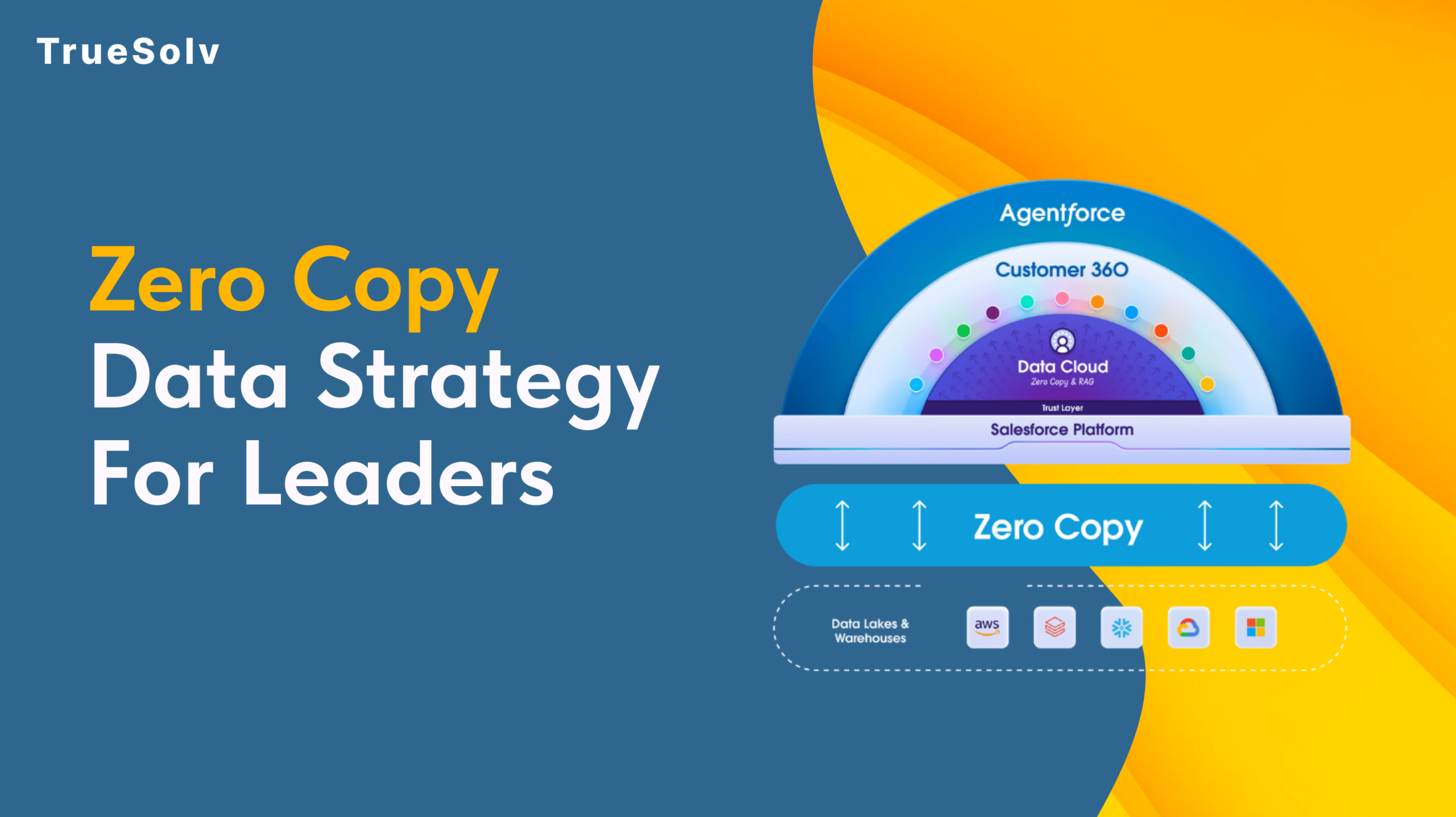
Zero Copy Data Strategy For Salesforce Leaders
Your data pipeline costs are high because duplication is still the default. Zero Copy changes that entirely.
How to Upload Custom Metadata Type Records from CSV
Salesforce said no to Data Loader for custom metadata. Here is what actually works for admins who hit this wall.
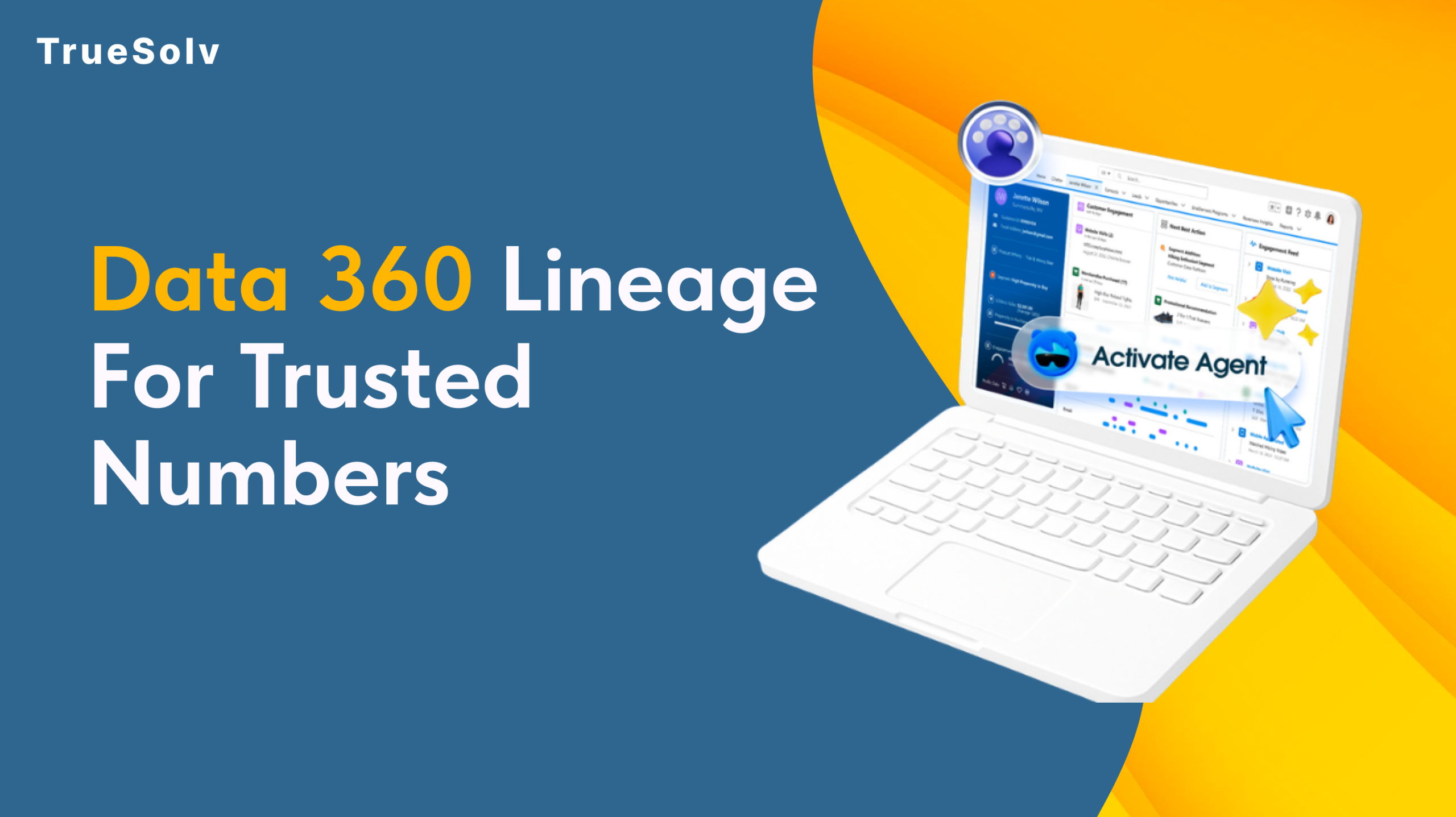
Data 360 Lineage For Trusted Numbers
Two reports. Two very different numbers. One very uncomfortable meeting. Here's how Data 360 Lineage solves it.
Salesforce External Client Apps Integration Governance
Most Salesforce orgs have integrations nobody fully owns. Built by a consultant who left, configured by an admin who guessed.

Salesforce Health Check Service for Secure CRM
Find security gaps, slow automation, dirty data, and brittle integrations, then fix them with a proper Health Check.
Salesforce Spring '26 Release — Top Features by TrueSolv
Spring '26 brings meaningful updates to Agentforce, Einstein, and Flow. Here's what actually matters for your org.