Salesforce Time Tracking Sales
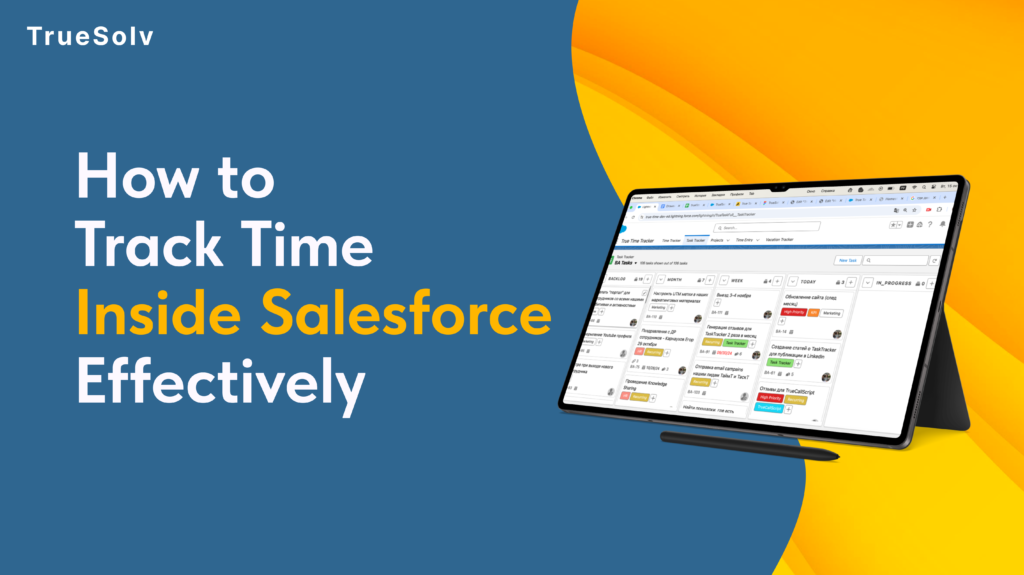
A sales manager can tell you the quota number for every rep on their team. Ask them how many hours per week those reps spend on actual selling versus admin work, meetings, and CRM updates — and the answer is usually a guess. The gap between what managers think their team is doing and what they are actually doing is where revenue goes quietly missing. True Time Tracker closes that gap, inside Salesforce, without a new tool, a new login, or a new workflow. Actual selling: 27% Typical B2B Sales Rep Time Split Actual selling activity27% Admin work and CRM updates28% Internal meetings19% Non-selling email and comms17% Other (travel, training, etc.)9% Source: Salesforce “State of Sales” research benchmarks. Your team’s split may vary — that is exactly the point. Why this gap exists at the 20 to 50-person stage At 10 people, a sales manager knows what every rep is doing because they are next to them. At 20 to 50 people, that changes. Reps are distributed, partially remote, or simply moving fast enough that day-to-day time patterns are invisible to leadership. Most sales tools track outcomes — deal value, close rate, pipeline stage. None of them track inputs in a way that is actionable. Pipeline reports tell you what happened. Time data tells you why it happened and what is likely to happen next. Without time visibility, the only lever a manager has when results are underperforming is to ask the rep what they think the problem is. That is a useful conversation but not a reliable diagnostic. Three decisions that become better with actual time data Account coverage Time allocation visibility lets managers see the full picture: a rep spending 14 hours a week on three legacy accounts — accounts that are renewing at stable rates and require minimal active management — while high-potential accounts get two hours each. The result shows up in pipeline three months later, not in this week’s activity log. With time data in Salesforce, the conversation changes from “why are these deals not progressing” to “let us look at where the time is going and redistribute it deliberately.” That is a more productive conversation with a more actionable outcome. Coaching conversations Most coaching conversations in sales are about results: close rate, pipeline coverage, deal velocity. These are lagging indicators. They tell you what already happened. Time patterns are leading indicators. A rep spending 60 percent of their selling time on proposals and zero time on prospecting will have an empty pipeline in six weeks. A rep who has not had a discovery call with a new prospect in 14 days is building the same problem. Time data surfaces these patterns before the pipeline report does. Headcount decisions Before hiring the next sales rep, most companies look at pipeline coverage and close rates. The more direct question is: how are current reps actually spending their time, and where are they constrained? If reps are spending three hours a day on admin that could be automated or systematised, the capacity problem is not a headcount problem. If they are spending all available hours on active selling and the pipeline still cannot grow, it is. Time data makes the distinction visible before a hiring decision is made. Decision Without time visibility With True Time Tracker Account coverage Manager asks rep why deals are not progressing. The real issue — hours disproportionately allocated to low-ARR accounts — is invisible. Manager sees actual time per account vs ARR per account. Reallocation conversation is data-driven: “You spent 14 hours on these three accounts. Here is what the time looks like vs revenue potential.” Rep coaching Coaching is based on close rate, pipeline coverage, deal velocity — lagging indicators. Manager reacts to what already happened. Coaching is based on time patterns — leading indicators. Rep spending 60% of time on proposals and 0% on prospecting will have an empty pipeline in 6 weeks. Manager can see and address this now. Capacity planning Headcount decision based on pipeline coverage and close rates. Team looks busy. Manager hires another rep. Productivity problem continues. Time data shows reps spending 3 hours/day on admin that could be systematised. Bottleneck is process, not people. Automation before hiring saves the cost of a rep. Pipeline forecasting Manager estimates based on rep self-reporting. Forecast accuracy is moderate at best and degrades as the quarter progresses. Time patterns on high-value accounts are a leading indicator of deal velocity. Time data improves forecast input quality before the pipeline report catches up. How True Time Tracker works inside Salesforce True Time Tracker logs time natively inside Salesforce, against the records that time relates to: Opportunities, Accounts, Activities, or custom objects. Reps log time in the same interface they use to update deals. Managers see time data in dashboards alongside pipeline data, without switching tools. The most common objection to time tracking is rep resistance — a perception that it is surveillance rather than a management tool. True Time Tracker addresses this by making the data visible to the rep as well as the manager. Reps can see their own time patterns, which is often the most effective way to surface inefficiencies that they were not aware of. Three questions True Time Tracker answers that your pipeline report cannot Pipeline reports track results. Time data tracks what produces them. 1Are my reps spending time on the right accounts?Time per account vs ARR per account reveals coverage misalignment immediately. High-potential accounts receiving low time allocation show up clearly — weeks before the missed deal shows up in pipeline.Pipeline report answer: “Here are the deals and their stages.” — Not useful for spotting coverage problems. 2What is actually taking up my reps’ selling time?If a rep’s capacity is constrained, the question is whether it is constrained by selling activity or by admin and meetings. Time data gives you that breakdown. The intervention is different depending on the answer.Pipeline report answer: “The rep has 12 open opportunities.” — Does not tell you why
Salesforce Field Level Security Summer 26

Any Salesforce admin who has ever done a field-level security audit knows the process: open a profile, navigate to object settings, find the field, note the access, repeat for every other profile, then repeat for every permission set. It is tedious, error-prone, and nobody does it as often as they should. Summer ’26 adds a Field Access tab directly to Object Manager that shows the full picture in one place. What the Field Access tab shows At the bottom of each object in Object Manager, a new Field Access tab lists every field on the object alongside a consolidated view of exactly how access is granted — across all profiles and permission sets — in a single interface. Previously, getting this view required navigating each profile individually, cross-referencing permission sets separately, and building a mental or spreadsheet-based picture of who can see and edit which field. For a mid-sized org with 20 profiles and 40 permission sets, that process takes hours and is almost guaranteed to miss something. The Field Access tab shows it in one view. One object, every field, all access configurations visible simultaneously. ⚡ Salesforce Setup → Object Manager → Opportunity → Field Access Opportunity Standard Object Details Fields & Relationships Page Layouts Validation Rules Field Access New All profiles and permission sets — one view Field Label Profile / Permission Set Access Granted Via Amount ✓ Read / Edit Sales Rep, Sales Manager Profile: Sales Rep · Profile: Sales Manager Annual Contract Value ✓ Read / Edit Finance, Admin📖 Read only Sales Rep Perm Set: Finance View · Profile: Admin Internal Deal Notes ✓ Read / Edit Sales Manager, Admin✗ No access Sales Rep, Support Perm Set: Manager Access · Profile: Admin Stripe Subscription ID 📖 Read only Finance, Admin✗ No access Sales Rep, Support, CS Perm Set: Finance View · Profile: Admin Read-only in Summer ’26. Edit permissions via Profile or Permission Set settings. Why this matters more than it sounds Field-level security is one of the most common gaps in Salesforce org audits. Orgs grow, permission sets multiply, profiles get copied from other profiles, and nobody has a clear picture of who can read or edit which field. Compliance audits, security reviews, and new admin onboarding all require this visibility — and getting it has always required more effort than it should. The Field Access tab does not change permissions. It makes the existing permissions visible and auditable at a glance. That distinction matters for compliance contexts specifically: the audit requirement is often to demonstrate that someone reviewed field access, not that they changed it. Summer ’26 makes that review faster, more reliable, and easier to document. Three situations where this saves significant time ✗ Before Summer ’26 1Open Profile 1 → Object Settings → navigate to field → note access level~3 min per profile 2Repeat for all 20 profiles. Build a spreadsheet.~60 minutes 3Open each permission set and check the same field. Add to spreadsheet.~30 min for 40 perm sets 4Cross-reference manually. Identify gaps. Probably miss one.~20 minutes 2+ hours. Error-prone. Often skipped. ✓ With Summer ’26 Field Access tab 1Open Object Manager → select object → click Field Access tab~30 seconds 2All fields listed. All profiles and permission sets in a single view.Immediate 3Search or scroll to the specific field. Access visible at a glance.~2 minutes 4Screenshot or export for the audit documentation. Done.~5 minutes total Under 10 minutes. Reliable. Auditable. Where the Field Access Tab Saves Significant Time 🔒Before a new team accesses sensitive account dataWhen a new department or external partner is being onboarded to Salesforce, reviewing field-level security on Account, Contact, or Opportunity objects is a required step. The Field Access tab makes this a 10-minute review instead of an afternoon, and makes the outcome documentable.Time saving: ~2 hours → ~10 minutes per object reviewed 📋GDPR and HIPAA-adjacent field visibility auditsDemonstrating controlled access to specific fields — email addresses, phone numbers, health-related custom fields — requires showing who has access and how it is granted. The Field Access tab produces that view without a manual cross-referencing exercise, making it audit-ready by design.Compliance requirement: access visibility is demonstrable in one screenshot 🔍Debugging a field not visible for a specific userA rep reports a field is missing from their record page. Previously: check profile → check permission sets → check page layout. With Field Access tab: search for the field, see all access configurations simultaneously, identify the gap in under 2 minutes.Debugging time: ~20 minutes → ~2 minutes What it does not do yet The Field Access tab is read-only in the initial Summer ’26 implementation. You can view field access across all profiles and permission sets, but you cannot edit permissions from this interface. Changes still require navigating to the profile or permission set and making edits there. Worth watching: The ability to edit permissions from the same view — which would make it genuinely powerful — is the likely Winter ’27 addition. The visibility improvement is real and significant now. Editing from the same surface is the logical next step. Field-level security has always been one of the hardest things to audit in a Salesforce org. Summer ’26 does not solve the permissions complexity — it makes it visible. That is the starting point for everything else. Salesforce Admin Summer ’26 Field Level Security Object Manager Salesforce Release Share: LinkedIn Twitter / X Copy link In this article 01What the Field Access tab shows 02Why this matters 03Three time-saving scenarios 04What it doesn’t do yet Field Access tab — quick facts 🆕Where: Object Manager → any object → Field Access tab (last tab) 📊Shows: All profiles and permission sets in one consolidated view 🚫Doesn’t do: Editing — read-only in Summer ’26 📅Available: Summer ’26 GA — sandboxes from ~May 9 Use this tab when… 🔒Onboarding a new team to sensitive data 📋Running a GDPR / HIPAA audit 🔍Debugging a missing field About the Author DK Dilyara Kolesnikova Salesforce Developer & Technical Writer at TrueSolv
Eight Summer ’26 Features Salesforce Developers Should Actually Care About

Summer ’26 release notes landed April 22. Sandboxes upgrade around May 9. If you have not looked at the notes yet, here are the eight features most worth your time — ranked by how much they will actually change your day-to-day development workflow, not by how impressive they sound in the release announcement. Feature Impact Action before May 9 sandbox upgrade LWC Single Component Preview High · GA Test with your most complex custom component. Verify preview correctly reflects nested child component states. No production risk — pure upside for iterative development speed. LWC State Management High · GA Identify pages with multiple LWC components sharing state via prop drilling or message channels. Build a proof-of-concept state store in sandbox before committing to a refactor plan. Collapsible Fault Paths in Flow Medium · GA No action needed before upgrade. Open your largest production flow in the Summer ’26 sandbox to confirm the canvas renders correctly and collapse fault paths for readability. Global Flow Resources Medium · Preview Enable in a preview sandbox. Identify the variables declared repeatedly across your flows. Evaluate the scope of what a GA version could simplify — but do not plan production changes until GA. AI Content Summarizer Component Medium · GA Drop the component onto an Opportunity or Account page in sandbox. Verify Agentforce has data access to the fields that would make the summary useful. Flag gaps for configuration before production. External Client Apps Enforcement High · Act now Open App Manager now. Filter by Connected App type. Identify every Connected App your org created and manages. Confirm migration status to External Client Apps before Summer ’26 tightens enforcement. Web Console for Apex/SOQL Medium · GA Familiarise yourself with the interface in sandbox. Evaluate whether it replaces Developer Console for ad-hoc work or supplements VS Code. Low risk — no configuration required. Agentforce in CRM Surfaces High · Test now Load your production-critical customised pages in the Summer ’26 preview sandbox. Check for layout conflicts between custom Lightning components and new Agentforce-aware UI elements before the upgrade lands in production. 1. LWC Single Component Preview This is the feature that has appeared on Salesforce developer wishlist surveys for multiple consecutive years and finally reached GA in Summer ’26. The ability to preview a single Lightning Web Component in the browser or in VS Code without triggering a full page reload is not a small improvement — it removes one of the most consistent time sinks in iterative LWC development. The practical impact depends on how much LWC work you do. For a developer spending four hours on a component UI, the difference between a 90-second page reload and an instant preview compounds significantly across a day. For teams building complex component libraries, the impact is considerable. GA means it is stable, supported, and safe to rely on in production development workflows. Test it in your Summer ’26 sandbox first to confirm it behaves correctly with your component architecture. 2. LWC State Management State Management for LWC reaches full general availability in Summer ’26, providing centralised state across component trees — the standard pattern for managing shared state in modern frontend development that LWC has been missing. The practical scenario: an Opportunity detail page has a line items component, a totals component, and a discount component. All three need to respond to the same underlying deal data. Without State Management, this requires lifting state through the parent component via properties, creating a coordination pattern that grows increasingly unwieldy as component trees deepen. With State Management, each component subscribes to a shared store directly. Before — prop drilling across components // Parent must hold all shared state // and pass down as props to each child @track totalMrr = 0; @track discount = 0; @track finalPrice = 0; // Wired to LineItems via: <c-line-items total-mrr={totalMrr} discount={discount}> </c-line-items> // And to Totals separately… // Grows unwieldy fast. After — centralised state store // Shared store — declared once import { createStore } from ‘@salesforce/state’; export const oppStore = createStore({ totalMrr: 0, discount: 0, finalPrice: 0 }); // Each component subscribes directly // No parent coordination needed // LineItems, Totals, Discounts // all update from the same store 3. Flow UI: Collapsible Fault Paths and Readable Data Tables Collapsible fault paths extend the canvas cleanup work started in Spring ’26 with collapsible Decisions and Loops. Large production flows become difficult to maintain when fault paths branch from every element that can fail and the canvas is an unnavigable tangle of error-handling logic. For developers maintaining flows built by previous admins, collapsible fault paths are a significant cognitive load reduction. The execution path becomes readable when error handling is collapsed. When debugging, expand the specific fault path you are investigating rather than navigating around all of them simultaneously. The data table display improvements in Flow Builder are in the same category — cosmetic in that they do not change flow behaviour, but meaningful for any developer who has tried to read a data table in the current canvas and given up. 4. Global Flow Resources Still in preview orgs, but worth testing now: Global Flow Resources enable variables and components to be shared across flows platform-wide rather than redeclared in every flow that needs them. The impact depends on your org’s automation architecture. Orgs with dozens of flows that each declare the same custom picklist variable or the same error-handling configuration are the immediate beneficiaries. If this ships as expected in Winter ’27 based on the current preview, it significantly reduces duplicated logic across complex automation layers. Because it is in preview, it belongs in your summer sandbox testing but not in your production planning until GA is confirmed. 5. AI Content Summarizer Component A new AI Content Summarizer component can be dropped onto any Lightning record page from App Builder without writing Apex. It surfaces an Agentforce-generated summary of the record’s key information — account history, deal context, case background — directly on the page. The developer
Agent Script: The Layer Between AI Flexibility and Enterprise Control
The biggest complaint about AI agents in production has always been the same: they work great in demos and go off-script in real deployments. Salesforce heard that complaint and built Agent Script — a scripting language that lets you define exactly how an agent behaves, step by step, without giving up the flexibility that makes AI useful. Here is what it is, how it works, and why it changes the calculus on Agentforce adoption. Agent Behaviour: Without vs. With Agent Script WITHOUT Agent Script — probabilistic path WITH Agent Script — deterministic rails User request Path A Path B Path C Outcome depends on reasoning and conversation flow ⚠ Risk: agent may skip required verification if the user’s phrasing is persuasive or impatient User request Identity verified REQUIRED STEP — Agent Script AI handles response Verification tool call must return confirmed — no bypass ✓ Deterministic: required steps always execute AI reasoning operates within defined rails The problem Agent Script was built to solve AI agents are probabilistic systems. Give an agent a task and it reasons toward an outcome — evaluating options, choosing actions, interpreting ambiguous inputs — in a way that is flexible and often impressive but never fully predictable from the instruction set alone. For customer service, sales qualification, and internal help desk use cases, that flexibility is valuable. The agent can handle variations in how a question is asked, adapt to unexpected inputs, and reach correct outcomes through different reasoning paths. However, for enterprise deployments where specific steps must happen in a specific order — identity verification before account access, compliance disclosure before a financial recommendation, escalation to a human at a specific deal stage — probabilistic behaviour is a blocker, not a feature. The question is not whether the agent gets to the right answer. It is whether it follows the required path to get there. How Agent Script works Agent Script adds a deterministic layer on top of the AI reasoning layer. You define the fixed logic in a human-readable JSON expression language — the if/then rules, the required tool calls, the handoff triggers, the compliance checkpoints — and the LLM handles the conversational reasoning in between the defined steps. The mental model is a set of rails. Between the rails, the agent reasons freely and handles variation naturally. At the defined points on the rails, the behaviour is fixed: the agent must perform a specific action, verify a specific condition, or hand off to a specific resource before it can continue. Agent Script — identity verification before account access Simplified example // Step 1: Required identity verification // Agent cannot proceed until this returns “verified” { “step”: “verify_identity”, “type”: “required_tool_call”, “tool”: “IdentityVerificationService”, “condition”: { “result”: “verified” // must match — no bypass } } // Step 2: AI handles the response conversation // LLM reasoning operates freely here { “step”: “handle_account_query”, “type”: “llm_reasoning”, “context”: “account_data”, “guardrails”: [“no_pii_in_response”] } // Step 3: Handoff trigger if deal threshold met { “step”: “check_escalation”, “if”: { “deal_value”: { “$gt”: 50000 } }, “then”: { “action”: “handoff_to_human”, “queue”: “senior_sales_rep” } } Between the defined steps, the AI reasons freely. At the defined steps, the behaviour is fixed — the agent cannot proceed without completing the required action. The distinction from a traditional decision tree is important. Agent Script is not replacing AI reasoning with a flowchart. It is constraining the parts of the interaction where constraint is required while leaving the parts where AI is valuable free to operate as designed. Practical examples Customer service agent with identity verification Without Agent Script: The agent is instructed to verify identity before accessing account data. Whether it follows that instruction precisely depends on how the conversation goes — a persuasive or impatient customer might cause the agent to skip or abbreviate the step. With Agent Script: Identity verification is a defined step in the script. The agent cannot proceed to account lookup until the verification tool call returns a confirmed result. The LLM handles the conversation around verification, but the verification itself is not optional. Sales qualification agent with human handoff Without Agent Script: The agent is instructed to hand off to a human sales rep when a qualified opportunity reaches a specific threshold. Whether it recognises the threshold correctly depends on its interpretation of the conversation. With Agent Script: The handoff trigger is defined explicitly. When the deal value field exceeds the threshold, or when the prospect uses specific phrases indicating high purchase intent, the agent executes a defined handoff action to the Salesforce queue. The LLM does not decide whether the handoff happens; the script does. Integration with Agentforce Builder Agent Script integrates with Agentforce Builder — the conversational build environment introduced in Spring ’26. Admins and developers write Agent Script in the Builder interface alongside the natural language instructions that govern the agent’s conversational behaviour. The separation of concerns in the build environment mirrors the separation in the runtime: conversational behaviour is configured in natural language, deterministic controls are written in Agent Script. Neither replaces the other. Additionally, Agent Script was open-sourced at TDX 2026. The full specification, parser, and compiler are on GitHub. For compliance teams and legal teams who need to understand and audit agent behaviour independently of the vendor, this is significant: Agent Script is a readable, auditable format that does not require Salesforce expertise to understand the logic. Who needs Agent Script now, and who can wait Use case type Determinism non-negotiable Pure AI reasoning is fine Customer service — account access Identity verification must precede account lookup without exception. Agent Script enforces the required step regardless of conversation flow. Handling FAQ questions that do not involve personal data — product information, store hours, general policies. Financial services Regulatory disclosures must be delivered before a product recommendation. Compliance checkpoints cannot be skipped regardless of conversation length. Summarising publicly available market information with no personalised recommendation required. Sales qualification Handoff to a human rep must trigger at a specific deal stage or value threshold,
Summer ’26 Flow Updates: Six Things That Will Actually Change How You Build Automations

Every Salesforce release, the Flow section of the release notes is the one worth reading first. Summer ’26 did not disappoint — new date operators, batch size control for scheduled flows, collapsible fault paths, natural language updates for Screen Flows via Agentforce, and a genuinely better radio button experience. Here is the full breakdown of what landed, what it does, and when you would actually use it. Feature What it does Who benefits most 📅 Date Field Operators New operators: Is Today, Is Tomorrow, Is On, Anniversary. Applies to Date fields only — not DateTime. Admins building renewal reminders, SLA tracking, birthday campaigns, or any time-sensitive record logic. Eliminates the need for formula field workarounds. ⚙️ Scheduled Flow Batch Size Custom batch size control instead of the fixed default of 200. Smaller batches = lower governor limit risk. Larger batches = faster processing. Any org running Scheduled Flows against unpredictable record volumes. High-value for flows with DML operations or external callouts. 🗂️ Collapsible Fault Paths Fault paths in Flow Builder can now be collapsed. Canvas continues the visual cleanup started in Spring ’26 with collapsible Decisions and Loops. Admins managing complex flows with shared error-handling subflows. Large production flows become significantly more readable. 🤖 Natural Language Screen Flow Updates Agentforce natural language editing now supports Screen Flows. Describe a change in plain language, Agentforce makes the adjustment. Early access — review required. Admins who want to trial Agentforce-assisted flow building. Works well for additive changes with clear descriptions. Complex logic still needs manual work. 🔘 Radio Button Group New compact visual component replacing standard radio buttons in Screen Flows. Horizontal and vertical layout options, less vertical space per option. Any admin who has built Screen Flow intake forms and found standard radio buttons too space-heavy. Direct UI improvement for end users. 📧 Email Template Deployment Fix Send Email Actions using Email Templates now deploy correctly between environments. Fix is in “Show advanced options” in the action properties. Orgs with proper sandbox-to-production workflows who have been maintaining environment-specific flow versions as a workaround. One-time fix. 1. New date field operators Flow now supports four new date operators: Is Today, Is Tomorrow, Is On, and anniversary-based matching for date fields. For any flow that does time-sensitive record logic, this is a meaningful improvement over the workarounds that previously required formula fields or date math. The practical applications are immediate. A renewal reminder flow that should trigger 30 days before the contract end date can now use Is On with a relative date formula rather than a calculated checkbox field. A birthday-triggered campaign can fire using the anniversary operator without building a custom evaluation layer. Any flow checking whether a date falls within a specific window benefits directly. One important constraint: these operators apply to Date data types only, not DateTime. If your date field includes a time component, the new operators will not be available. This is worth checking against your object schema before building. Summer ’26 — New Flow Date Operators Quick Reference Is Today Matches records where the date field equals the current date. Ideal for daily-run flows that flag due-today tasks, contracts expiring today, or time-sensitive SLA conditions. Is Tomorrow Matches records where the date field equals tomorrow’s date. Use for advance notification flows — renewal reminders, follow-up triggers, appointment confirmations the day before. Is On Matches records where the date field equals a specified date or relative date formula. Most flexible of the new operators — covers “is on the first of next month” and similar calculated dates. Anniversary Matches records where the month and day of the date field match the current month and day, regardless of year. Use for birthday campaigns, contract anniversary workflows, and renewal sequences tied to the same calendar date each year. ⚠ Important: these operators apply to Date fields only — not DateTime. Check your field type before building. 2. Batch size control for Scheduled Flows Scheduled Flows now support a custom batch size setting. The default has always been 200 records per batch, which is a sensible baseline for most use cases but creates problems when qualifying record counts are unpredictable and the flow logic includes DML operations, callouts, or other governor limit-sensitive steps. Smaller batch sizes reduce the risk of hitting limits when record volume spikes. A flow that runs cleanly on 200 records can fail when it processes 1,400 and the batch triggers 200 SOQL queries rather than 200. Reducing the batch to 50 adds processing time but removes the failure risk. The tradeoff runs in both directions. Larger batches complete the full scheduled run faster when record volume is stable and governor limits are not a concern. The new control lets admins tune this explicitly rather than accepting a single default for every scenario. 3. Collapsible Fault Paths Fault paths can now be collapsed in Flow Builder, following the Spring ’26 changes that added collapsible Decisions and Loops. This is a quality-of-life improvement rather than a capability change — fault paths do not behave differently when collapsed — but for anyone managing complex flows with shared error-handling subflows, the canvas clarity improvement is real. Large production flows become difficult to read when fault paths branch from every element that can fail and the canvas becomes a sprawl of error-handling logic. Collapsing fault paths lets admins focus on the main execution path during review and debugging, and expand fault handling when needed. 4. Update Screen Flows with natural language via Agentforce Agentforce-powered natural language editing, which launched for Record-Triggered and Scheduled Flows in Spring ’26, now extends to Screen Flows in Summer ’26. Admins can describe the change they want in plain language — ‘add a required email field before the address step’ — and Agentforce makes the adjustment in Flow Builder. This feature is in early access and the honest framing is the right one: it works well for additive changes that are clearly described. Reorganising a complex screen, adjusting conditional visibility rules, or changes that require
AgentExchange Salesforce: AppExchange Renamed
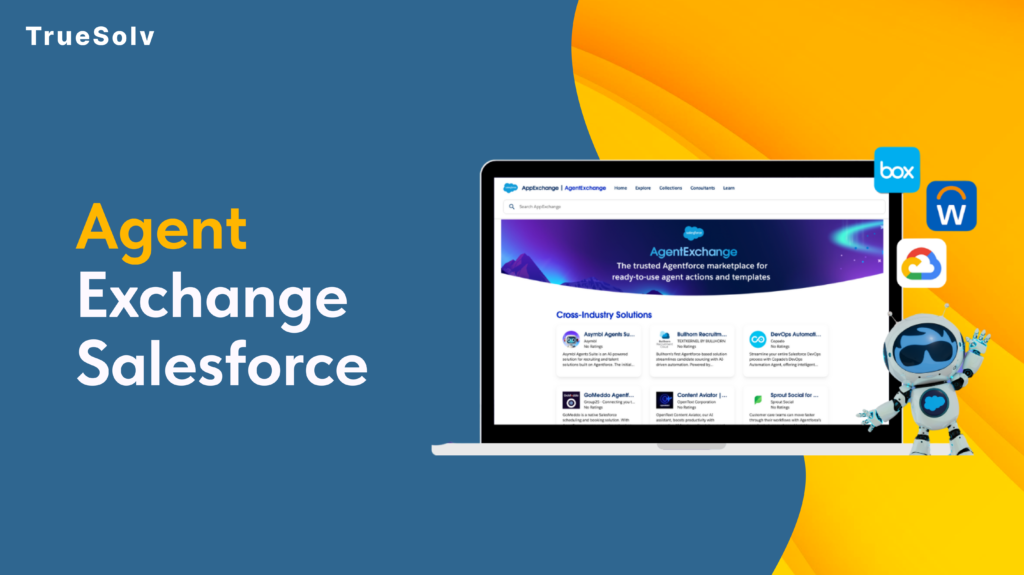
Salesforce has renamed things before. A lot. Data Cloud has had five names. Agentforce 360 had four. But AgentExchange, Salesforce’s most consequential rename yet is different. The AppExchange, launched in 2006, the marketplace that nearly 90 percent of Salesforce customers used to extend the platform, just became AgentExchange. Launched with a $50M Builders Fund and 13,000 apps, agents, and MCP servers under one roof. The community has thoughts. AppExchange to AgentExchange — Twenty Years 06 2006 AppExchange launches — first enterprise app marketplace Launch 12 2012 1,000 apps milestone 18 2018 AppExchange integrates Slack apps after acquisition 24 2024 Agentforce launches — first AI agent listings appear 26 2026 AgentExchange — unified catalog, AI search, $50M fund Now What actually changed The rename is not purely cosmetic. Three previously separate catalogs, the AppExchange, the Slack Marketplace, and the Agentforce ecosystem, are now unified into a single AI-searchable marketplace. That means 10,000 Salesforce apps, 2,600 Slack apps, and over 1,000 agents and MCP servers from partners including Google, DocuSign, and Notion now live in one place. Discovery works differently. Instead of keyword browsing through categories, users describe what they need and AgentExchange surfaces the right solution. One-click activation replaces the previous multi-step install process. For admins who have spent time navigating package installation wizards, that reduction in friction is material. The $50M Builders Fund is the other concrete change. It provides investment, engineering support, and go-to-market backing for ISVs and partners building in the new ecosystem, not a fund you apply to generically, but structured support tied to building agents and MCP integrations for AgentExchange distribution. The case for why it is more than a rebrand The community frustration with Salesforce naming is understandable and largely justified. When a product gets four names in three years, each rename starts looking like a marketing exercise rather than a product decision. This one is different for a specific reason: the marketplace structure changed, not just the name. AppExchange was an app catalog optimised for keyword search and category browsing. AgentExchange is designed from the ground up for AI-guided discovery. Those are different products with different underlying assumptions about how users find and evaluate solutions. Moreover, the consolidation of Salesforce apps, Slack apps, and AI agents into a single catalog reflects a genuine product reality: the Salesforce platform in 2026 includes all three, and separating them into different marketplaces created friction for customers who needed solutions that span all three surfaces. Putting them in one place with AI-guided discovery is a coherent response to how the platform actually works now. Partner data from the announcement makes the economic case more concrete. DocuSign processed over 200 private offers in Q4 2025 with 60 percent faster time to signature after listing on the unified marketplace. Notion cut its average sales cycle from four months to three weeks. These are not typical launch testimonials — they are specific metrics tied to the marketplace distribution model. What the community is actually saying The Reddit r/Salesforce thread opened with ‘Why?’ and the SF Ben community spent a productive afternoon debating whether CTO Nicolas Vuilamy was right that the company would eventually just rename itself Agentforce. One Salesforce coach wrote: ‘It is all a clear sign that the future is not human for Salesforce.’ The tone ranged from resigned to genuinely unsettled. The underlying concern is reasonable. When every product gets an ‘Agentforce’ prefix and every marketplace becomes an ‘Exchange’, it starts to feel like the platform is being rebuilt around a bet on AI that has not yet fully proven itself in the field. That is a fair read. The counter is also fair: the bets Salesforce made on CRM in 2006 and on the cloud in 2010 looked aggressive at the time and turned out to be correct. The question is whether the AI agent bet is in the same category. What this means by role 13,000+ Solutions total Salesforce apps, Slack apps, agents, and MCP servers unified in AgentExchange at launch $50M Builders Fund Investment, engineering support, and go-to-market backing for ISVs building agents and MCP servers 300% YoY growth Growth in Slack AI agent listings since January 2026 — the fastest-growing category in the marketplace Role What actually changed for you What to do now Admin Unified catalog means one place to find solutions across Salesforce, Slack, and Agentforce. AI-guided discovery replaces keyword browsing. One-click activation replaces multi-step install wizards. Explore Browse AgentExchange for solutions you previously searched AppExchange for — new categories and unified search may surface options you did not know existed. Developer 1,000+ agents and MCP servers are now listed alongside traditional apps. These are structured integration tools AI coding agents can call directly — a new category of extension beyond installed packages. Evaluate Review available MCP servers relevant to your integration stack. The agent/MCP category will expand rapidly; early familiarity pays off. ISV / Partner The $50M Builders Fund and AI-guided distribution represent a genuine go-to-market shift. Marketplace discoverability now depends on AI-optimised listing quality, not just keyword-based search ranking. Act now Review AgentExchange listing criteria. Evaluate what an agent or MCP server submission would require for your product. The window to list early in an AI-native marketplace is open now. Decision Maker The rename signals Salesforce’s long-term direction: agents as the primary unit of value. The practical marketplace capabilities are similar to AppExchange for current purchasing decisions. The strategic signal is clear. Watch Track which vendor partners are building agents and MCP integrations. The ecosystem is reshaping around agent-based extensions — understanding the map now informs technology roadmap decisions later. Building on Salesforce and thinking about what AgentExchange means for your product or integration strategy? Reach out at truesolv.com — we work with the Salesforce ecosystem daily. Follow us on LinkedIn for more Salesforce news with less jargon.
Salesforce Summer 26 Developer Features

Every Salesforce Summer ’26 release has one developer feature that teams have been waiting for since approximately forever. LWC Component Preview is finally generally available. State Management for LWC reaches full GA. And the new Release Manager beta introduces a three-channel preview system that changes how teams stay ahead of what is coming. Here is the full rundown. LWC Component Preview finally GA This is the one. Anyone who has spent 90 seconds watching a Salesforce page reload to verify a two-line CSS change understands what this feature means for development speed. LWC Component Preview lets you see a single Lightning Web Component render in the browser or in VS Code without triggering a full page refresh. The feature has been in preview for several releases. Reaching GA in Summer ’26 means it is now stable, supported, and deployable in production orgs. The practical impact on iterative component development — particularly for orgs building complex page architectures with multiple custom components — is immediate and significant. State Management GA in Summer ’26 State Management for LWC is now fully generally available. The feature adds centralised state management across component trees — solving a problem that every developer building complex page architectures with multiple LWC components has run into: coordinating shared state without lifting it through the entire component tree via props. Salesforce Release Manager Beta — Three Channels 🏭 Standard Stable production The familiar quarterly release. Fully tested, fully supported, available in all sandboxes and production orgs. Best for Production orgs. Teams that need predictability above all else. The default for every Salesforce org. ⚡ Accelerated Production-ready early Features that are complete and tested but not yet in a major quarterly release. Earlier access, same quality bar as Standard. Best for Teams that want new capabilities before the next quarterly drop. Sandbox testing of features that are not yet in Standard. 🔬 Dev Active development Features in active development. Not production-ready. For evaluation, feedback, and planning — not for customer-facing work. Best for Developers who want to evaluate upcoming platform direction. Architects planning ahead. Never for production use. The practical benefit is cleaner data flow, less imperative code for managing shared state, and more predictable component behaviour when multiple components on a page need to respond to the same underlying data. For orgs building Opportunity detail pages with line items, totals, and discount components that all need to update from the same source, this removes a significant amount of coordination boilerplate. Salesforce Release Manager beta The Release Manager is the most strategically significant developer feature in Summer ’26. It gives developers access to three distinct release channels: Before: prop-drilling across components Without State Management // ParentComponent.js // Must pass totalMrr down to // every child that needs it export default class ParentCmp { @track totalMrr = 0; @track discount = 0; @track finalPrice = 0; } // Must wire props manually // to LineItems, Totals, Discounts // components separately After: centralised state store With State Management // oppStore.js — shared state import { createStore } from ‘@salesforce/state’; export const oppStore = createStore({ totalMrr: 0, discount: 0, finalPrice: 0 }); // Any component subscribes directly // No prop drilling needed Both LineItems, Totals, and Discounts components subscribe to oppStore directly — no parent coordination needed Standard: the stable production release. Familiar, predictable, the channel your production org is already on. Accelerated: production-ready features that are complete but not yet in a major release. These are features Salesforce has shipped and tested but held back from the standard release cycle. For teams that want to adopt new capabilities ahead of the next quarterly release, this is the channel. Dev: new features in active development. Not production-ready, not suitable for anything close to customer-facing work, but the right channel for teams that want to evaluate and influence upcoming platform direction. The Release Manager represents a meaningful shift toward continuous delivery for Salesforce. Historically, the three-times-a-year release cycle has meant long waits between features shipping at Salesforce and becoming available to developers. The Accelerated channel closes that gap considerably. Custom Flow Screen Component Styling Hooks Developers building custom Screen Flow components in LWC can now expose CSS styling hooks — color, border radius, font weight, and other SLDS attributes — so admins can customise the visual appearance of shared components without touching the component code. The practical scenario: an org has multiple business units sharing a common intake form component. The component logic is identical but each business unit needs different branding. Previously, the developer either maintained multiple versions of the component or the admin had no control over the visual output. Styling hooks solve this cleanly — one component, admin-configurable appearance per context. React support via Multi Framework (Beta) Salesforce Multi Framework enters beta in Summer ’26, allowing developers to build with ReactJS hosted natively on Salesforce, with data accessed via GraphQL and full integration with Agentforce Vibes. This is the most significant frontend architecture announcement in the release, and it deserves an honest take. The LWC-only frontend story is over. Salesforce is acknowledging that the developer ecosystem it wants to attract builds in React, and that requiring teams to learn a Salesforce-specific component model is a friction point that affects adoption of the platform for new development. The complication is a third UI model alongside LWC and the Agentforce Experience Layer. Orgs making frontend architecture decisions now face a genuinely more complex set of options. The article’s recommendation: Multi Framework is Beta and the right time to evaluate it is in preview orgs, not production. 5 Things Developers Should Test in Their Summer ’26 Preview Sandbox Before May 9 1 LWC Component Preview with your most complex component Open a custom LWC component in VS Code, make a CSS change, and preview it without a full page reload. Test with a component that has nested child components to confirm the preview reflects the full hierarchy correctly. GA — test for your stack 2 State Management on a page with multiple components
Salesforce Headless 360 and MCP

For most of Salesforce’s history, building on the platform meant working inside it: browser open, Setup menu navigated, page layouts configured. Salesforce Headless 360, announced at TDX on April 15, draws a line under that era. Every piece of the platform (data, workflows, business logic, compliance controls) is now reachable as an API, an MCP tool, or a CLI command. No browser required. Here is what that actually means if you build integrations or work with AI coding tools. Salesforce Headless 360 — How the Platform Is Now Exposed Salesforce Platform Data · Flows · Logic · Permissions Headless 360 REST / Bulk / Streaming Standard Salesforce APIs 60+ MCP Tools AI-callable structured tools CLI / DevOps Center Programmatic CI/CD access Human Developers CLI · VS Code · CI/CD pipelines AI Coding Agents Claude Code · Cursor · Codex Integration Systems MCP servers · External APIs No browser required. Every capability reachable as API, MCP tool, or CLI command. What Salesforce Headless 360 Ships With The headline number is 60 new MCP tools exposing Salesforce capabilities as structured interfaces that AI agents can call directly: objects, flows, deployments, permissions, reports. Alongside those, 30 preconfigured coding skills cover the most common Salesforce development tasks, from writing Apex triggers to configuring permission sets. DevOps Center MCP and Natural Language DevOps The DevOps Center MCP is the most immediately practical piece for integration teams: it brings programmatic access into any CI/CD pipeline. Natural Language DevOps sits on top of that: describe what you want to deploy in plain language and agents execute it. Salesforce cites a 40 percent cycle time reduction for development workflows as an early benchmark from teams using the integrated toolchain. The framing from Salesforce is that the build loop requiring context-switching across four different tools now happens inside one connected experience. That is the right framing, but the practical reality depends heavily on where your org’s metadata and documentation quality sits right now. What MCP means for Salesforce integrations The Model Context Protocol is becoming the default interoperability layer for AI agents across the industry. By exposing Salesforce through MCP, Salesforce is positioning itself as a participant in multi-agent orchestration, not just a destination for data, but a system that AI agents from Claude Code, Cursor, Codex, and Windsurf can work within directly. The practical shift for integration teams is significant. Instead of writing API wrappers manually (defining the request shape, handling authentication, mapping the response), you describe the integration behaviour and an agent executes and tests it using the MCP tools that already understand Salesforce’s object model. A Practical Integration Example For example: an integration that syncs Salesforce Opportunity data to an external billing system previously required a developer to write and maintain the API connection, handle field mapping, and manage error states. With MCP-exposed Salesforce tools and an AI coding agent, the same integration can be described in plain language, generated, and validated against the actual org schema, including custom objects and fields, without manual API documentation reading. The constraint is the quality of the description. Vague integration requirements produce vague integrations. MCP tools remove the API plumbing problem; they do not remove the requirement to know what you are building. Agent Fabric and multi-agent governance Headless 360 opens the Salesforce platform to AI agents. Agent Fabric answers the follow-on question: when you have multiple agents from multiple vendors operating across Salesforce and other systems, who governs them? Agent Fabric is the control plane launched at TDX 2026. It provides deterministic orchestration and centralised governance across agents, tools, and LLMs, scanning for agents across Salesforce Agentforce, Amazon Bedrock, Microsoft Foundry, and MCP servers, then providing a unified view of what agents exist, what they have access to, and what they are doing. Why Deterministic Governance Matters The governance problem it solves is specific: AI agents are probabilistic. They reason toward outcomes, which means their behaviour cannot be fully predicted from the instruction set alone. Agent Fabric adds the deterministic layer: Agent Broker defines fixed handoff rules between agents, Agent Script enforces compliance checkpoints within workflows, and Trusted Agent Identity ensures agents execute with specific user permissions rather than a shared service account. For architects designing systems where agents span Salesforce and external platforms, Agent Fabric is the piece that makes enterprise-grade deployment possible rather than merely experimental. Workflow Traditional Salesforce dev Headless 360 + AI coding agents Write an Apex trigger Open Developer Console or VS Code → write Apex → deploy to sandbox → test manually → deploy to production Describe the trigger behaviour in natural language → agent writes Apex using your org’s actual object model → review → deploy via DevOps Center MCP Build a Salesforce integration Read API docs → write request/response handlers → map fields manually → handle auth and error states → test in sandbox Describe integration behaviour → agent generates using MCP tools that understand your schema → automated testing → review and approve Understand an existing automation Open Flow Builder or Apex class → read through the logic → trace dependencies manually → ask a colleague Ask Vibes (Ask mode): “Explain this trigger and whether it conflicts with the Process Builder on this object” — org-aware answer with dependency context Debug a production issue Reproduce locally → inspect error log → trace through code → write fix → test → deploy Debug mode: agent analyses error log, identifies root cause in org context, proposes targeted fix → developer reviews and applies Deploy a change across environments Package the change → run change set or Salesforce CLI deploy → validate in staging → release Natural Language DevOps: describe the deployment in plain language → agent executes via DevOps Center MCP with CI/CD pipeline integration Context-switching across tools VS Code → Org → Developer Console → Sandbox → Jira → Slack → back to Org. Multiple context switches per task. One connected experience inside the development environment. Salesforce cites 40% reduction in development cycle time. What you need before Headless
Salesforce Summer 26 Admin Checklist
Most orgs get surprised by Salesforce releases. Not because the dates are hidden — they are published months in advance — but because the checklist for actually preparing keeps getting skipped until something breaks in production. Summer ’26 sandboxes start upgrading around May 9. Here is a practical six-step admin prep list so that date does not catch you off guard. Summer ’26 — Main Upgrade Weekends ~May 9 Sandbox preview orgs upgradeVaries by instance — check trust.salesforce.com for your exact date ~June 5 First non-preview sandbox weekendMost non-preview sandboxes on NA and EU instances ~June 12 Second non-preview sandbox weekend + Production beginsProduction orgs start upgrading — varies by instance The six steps worth completing before May 9 Step 1: Find your instance and exact upgrade date Not all Salesforce instances upgrade on the same weekend. Your specific upgrade date depends on the instance your org runs on, and there are three main release weekends across May and June. Find your instance in Setup under Company Information, then check the Salesforce Trust maintenance calendar for the exact date. This matters because ‘around May 9’ could mean May 9 or it could mean June 12 depending on your instance. Knowing your actual date changes how urgently the rest of this checklist needs to happen. Salesforce Trust maintenance calendar Step 2: Review the Summer ’26 release notes for your specific stack The full release notes are long. The useful shortcut is to search for ‘enforcement’ in the notes, because enforcement items are the changes that will be applied automatically — including to orgs that have not opted in to anything. Two items affect most orgs: the accessibility enforcement for components at 200 percent zoom, and the X (Twitter) Auth Provider callback URL change that requires manual reconfiguration. Both are breaking changes for the orgs they affect. Neither fixes itself after the upgrade. Salesforce Summer ’26 release notes Step 3: Audit your Connected Apps and External Client Apps status Summer ’26 tightens the External Client Apps enforcement that began in Spring ’26. If your org has Connected Apps your team created — not vendor-installed managed package apps, but apps your own admins or developers built — check whether they have been migrated. Apps that have not been migrated will face increasing enforcement pressure in Summer ’26. Connected Apps migration guide Step 4: Decide between preview and non-preview sandbox Preview sandboxes opt in to the Summer ’26 upgrade early, giving you more time to test before the production release. Non-preview sandboxes stay on the Spring ’26 release longer, giving you more time with a stable environment. Neither choice is universally correct — it depends on how many customisations you have to test and how much development work is currently in flight. The Salesforce Sandbox Preview Guide explains how to make the switch if you want to opt your sandbox into preview before the window closes. Summer ’26 Admin Prep — 6 Steps Before May 9 Complete before upgrade 1 Find your instance and exact upgrade date Setup → Company Information → note your instance (e.g. NA87). Check trust.salesforce.com/status/maintenance for your exact date. “Around May 9” could mean May 9 or June 12 depending on your instance. 5 minutes 2 Search “enforcement” in the Summer ’26 release notes Enforcement items are auto-applied — you do not opt in. The two that affect most orgs: accessibility enforcement for components at 200% zoom, and the X (Twitter) Auth Provider callback URL change that requires manual reconfiguration. Breaking changes 3 Audit your Connected Apps and ECA migration status App Manager → filter by Connected App → identify apps your org created (not vendor managed packages). If any have not been migrated to External Client Apps, Summer ’26 tightens enforcement further. Act now if pending 4 Decide: preview sandbox or non-preview? Preview gives you more testing time before production upgrades. Non-preview gives you a longer stable window during active development. The Salesforce Sandbox Preview Guide covers how to opt in. Window closes before May 9. Decision needed 5 Review Scheduled Flows that process large record volumes Summer ’26 introduces custom batch size control for Scheduled Flows. The default of 200 is now configurable. Flag any flow where governor limit errors are a known risk — set appropriate batch sizes before the first run on the new release. New control available 6 Bookmark the Release Manager beta opt-in New in Summer ’26: three release channels — Standard (stable), Accelerated (production-ready, not yet in major release), Dev (in active development). Opt in now for earlier visibility into what comes after Summer ’26. New capability Step 5: Review Scheduled Flows that process large record volumes Summer ’26 introduces custom batch size controls for Scheduled Flows. The default batch size of 200 records is now configurable. Any flow processing large record volumes where governor limit errors are a known risk should be reviewed before the upgrade lands, so you can set appropriate batch sizes from the first run on the new release rather than after the first failure. Step 6: Bookmark the Release Manager beta opt-in New in Summer ’26, the Salesforce Release Manager gives admins and developers access to three feature channels: Standard for stable production behaviour, Accelerated for production-ready features not yet in a major release, and Dev for features in active development. This is a significant shift toward continuous delivery. Opting in now gives your team earlier visibility into what is coming after Summer ’26, rather than discovering it in the next release notes drop. Six steps, one week. Admins who work through this before May 9 spend the upgrade weekend watching things work. Everyone else spends it finding out what broke. Already testing Summer ’26 features in your sandbox? If your org needs a second pair of eyes before the upgrade, our team at truesolv.com does exactly that. Follow us on LinkedIn for release-critical updates every week.
Salesforce Summer 26 Release

Summer ’26 sandboxes start upgrading around May 9. Release notes dropped April 22. If you have not looked at them yet, the window before your sandbox looks different and your customisations start behaving unexpectedly is narrow. This is the short version of what is actually changing — not the full list of every feature, but the things admins and developers should know about before the upgrade arrives. Consideration Preview Sandbox Non-Preview Sandbox When it upgrades Early — around May 9 Upgrades ahead of production release Later — June 5 or June 12 Stays on Spring ’26 longer Testing window for Summer ’26 Longer — you have weeks to validate customisations before production upgrades Shorter — less time between sandbox and production upgrade Stability during active development Lower — your sandbox is on new code while dev work is still in progress Higher — dev work continues on stable Spring ’26 release Best for orgs with Many customisations to validate, time-sensitive compliance testing, proactive release teams Active development sprints, tight deadlines, small teams without dedicated release bandwidth How to opt in Follow the Salesforce Sandbox Preview Guide — window closes before May 9 No action required — non-preview is the default What is in Summer ’26 that admins need to know Agentforce woven into CRM surfaces Summer ’26 moves Agentforce from a standalone layer to something embedded in daily Sales Cloud and Service Cloud workflows. AI summaries, deal coaching suggestions, and automated research appear directly in the views reps already use. For admins, this means any customisations built against these surfaces — record detail layouts, list views, service console components — may need testing against the new Agentforce-aware UI before the upgrade lands. Flow UI improvements: collapsible fault paths and readable data tables Large production flows are hard to maintain when the canvas is an unnavigable tangle of fault paths and unformatted data. Summer ’26 adds collapsible fault paths and a significantly improved data table display inside Flow Builder. These are cosmetic in that they do not change flow behaviour, but the maintenance benefit is real for any org with complex automations. Additionally, Summer ’26 extends Agentforce-powered natural language editing to Screen Flows, having added it to Record-Triggered and Scheduled Flows in Spring ’26. This remains an early-access feature and requires review before applying suggestions to production flows. Accessibility enforcement at 200 percent zoom Salesforce is enforcing accessibility standards for UI components at 200 percent browser zoom in Summer ’26. For orgs with custom Lightning components, custom page layouts, or Visualforce pages, this may produce unexpected layout behaviour that needs testing before the upgrade. Standard Salesforce Lightning components are already compliant. Custom-built components need to be checked. External Client Apps migration enforcement tightens Spring ’26 disabled new Connected App creation across all orgs. Summer ’26 tightens the enforcement further. If your org has Connected Apps that have not been migrated to External Client Apps and your integration depends on them, this is the release where that becomes an active problem rather than a pending one. The Connected Apps that require action are the ones your org created and manages. Managed package apps from vendors are not affected. X (Twitter) Auth Provider callback URL change If your org uses X (formerly Twitter) as an OAuth provider for login or integration, the callback URL configuration requires manual reconfiguration in Summer ’26. This is a small but breaking change for orgs that use it — it will not fix itself automatically. Find it in Setup under Auth. Providers. AI Content Summarizer component available in Lightning App Builder A new AI Content Summarizer component can be dropped onto any Lightning record page directly from App Builder without writing Apex. For admins who want to surface Agentforce value to end users quickly and without a full development engagement, this is the most accessible on-ramp in the Summer ’26 release. Salesforce Summer ’26 release notes ⚠ ECA enforcement tightens in Summer ’26 — what breaks if you skipped Spring ’26 prep Spring ’26 change New Connected App creation was disabled across all orgs by default. A Salesforce Support request could re-enable it — temporarily. Summer ’26 change Enforcement tightens further. The Support workaround is being phased out. Orgs with unmigrated Connected Apps face an increasing compliance and functionality risk. What breaks Integrations that depend on Connected Apps you built and manage — not managed package vendor apps — will face disruption if migration is not completed. Managed package apps are not affected. Action needed Open App Manager → filter by Connected App type → identify apps your org created → confirm migration status. Apps not yet migrated need to move to External Client Apps before enforcement completes. Have questions about anything in the Summer ’26 release notes that could affect your org? That is exactly the kind of thing our team digs into every release cycle. Reach out through truesolv.com. Follow us on LinkedIn for weekly Salesforce release breakdowns.